
Surface-temperature ranges, atmospheric pressure and wind estimates are shown with their site, time and evidence class. A value marked as observed comes from a published mission record; a model value describes regional conditions rather than an instrument reading.
MARS WEATHER
Mars Weather: Temperature, Pressure and Wind
Mars weather is a highly variable combination of extreme cold, low atmospheric pressure, wind and airborne dust. This page connects the latest available station observations to modelled regional context without presenting forecasts as direct measurements.
Latitude, elevation, local solar time, season and dust loading all affect conditions. Mars also has a thin atmosphere and a large day-night temperature range, so a single global number cannot describe the planet.
Use the timestamp and source class before comparing sites. Direct observations, climatological products and operational estimates answer different questions and should not be merged into one unqualified weather value.
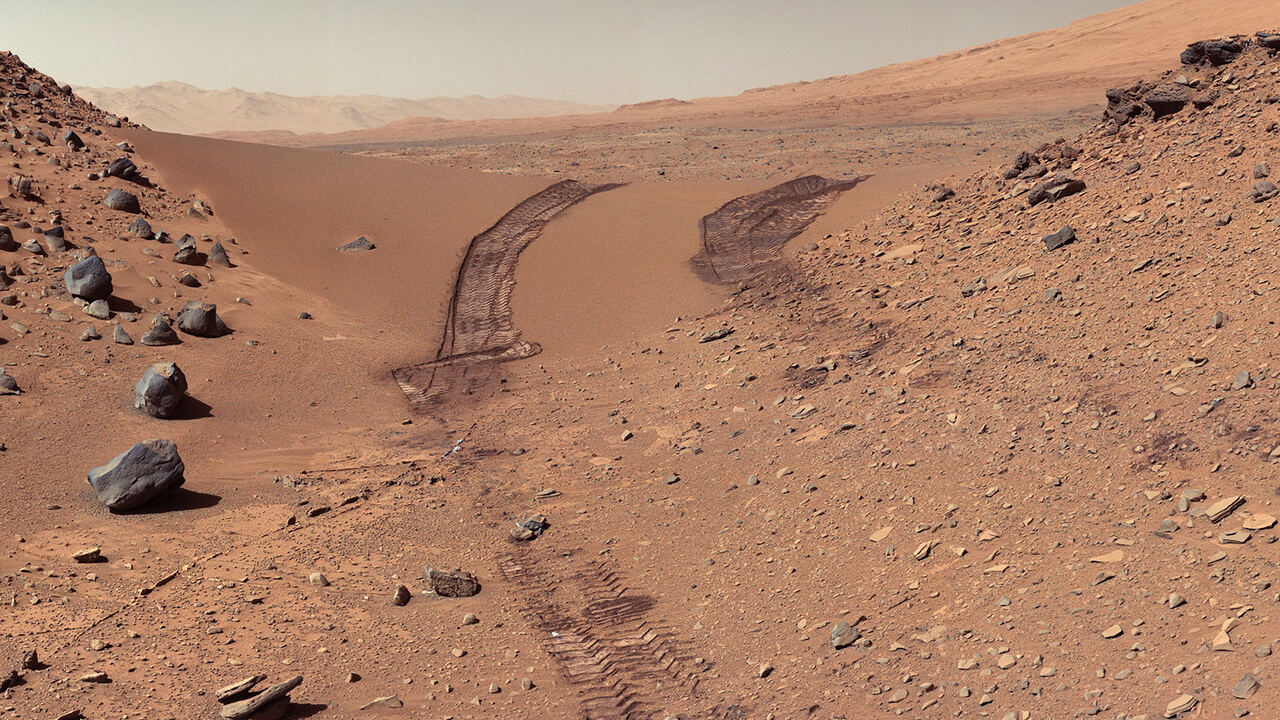
Scientific dossier
A planet with weather, seasons and dust
Martian weather is governed by a thin carbon-dioxide atmosphere, a large daily thermal cycle, seasonal exchange with the polar caps and dust that changes heating across the planet. Scientific interpretation therefore begins with place, sol, local solar time and evidence class.
From telescopes to surface stations
Seasonal markings and dust were first followed from Earth. Mariner and Viking established planetary meteorology; later orbiters mapped clouds, water vapour and dust, while landers and rovers measured local pressure, temperature, wind and radiation.
Temperature, pressure and circulation
Mars can be comparatively mild on sunlit equatorial ground and extremely cold at night and near the poles. Pressure is less than one percent of Earth's mean sea-level pressure and varies with elevation and seasonal carbon-dioxide frost.
Observation versus model
A rover observation applies to its instrument, site and published sol. A climatological field estimates conditions beyond the station network. Retrieval time, observation time and model epoch are therefore published separately.
Primary reading and data sources
Explore the Mars knowledge system